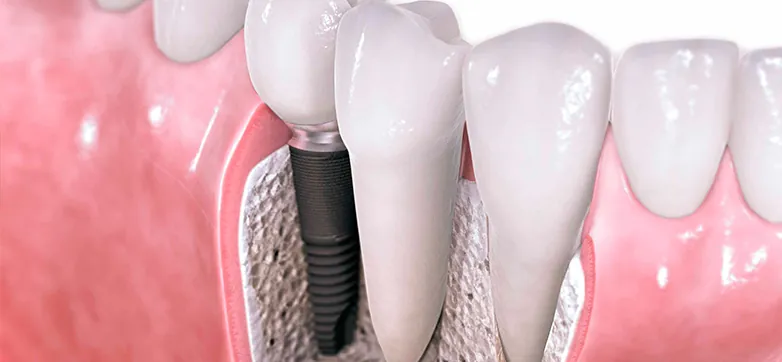
Implant options for different needs
- Single implant and crown: replaces one missing tooth without reshaping the teeth next to it.
- Implant-supported bridge: two or more implants support a bridge that replaces several teeth in a row.
- Implant-retained denture: implants help hold a denture in place for added stability when chewing and speaking.
- Full-arch restorations: a fixed bridge supported by implants may be an option for patients missing most or all teeth in an arch.
Your implant consultation
We review your health history, examine your gums and remaining teeth and take X-rays or other images to evaluate the bone. If gum treatment or a bone graft is needed first, we explain why and include it in your plan.
What the process looks like
Implant treatment happens in stages: placement, a healing period while the implant bonds with the bone, and the final restoration. Healing time varies from patient to patient, and we give you a timeline for your case.
Keeping implants healthy
Implants need the same daily care as natural teeth — brushing, cleaning between teeth and regular check-ups — because the gums and bone around them can still become inflamed.
Dental implants — frequently asked questions
How much does a dental implant cost?
Cost depends on how many implants you need, whether you need a bone graft and the type of restoration. You receive a written estimate after your evaluation.
Can I get an implant if I lost the tooth years ago?
Often, yes — but bone can shrink after a tooth is lost. Imaging shows whether there is enough bone or whether a graft may be recommended.
Is an implant better than a bridge?
Both are good options. An implant doesn't involve the neighboring teeth, while a bridge may be quicker. Your dentist will compare them for your situation.
This page provides general information and is not a diagnosis. Treatment recommendations require an individual examination, and service availability may vary by location.